
Our Services

Communications
Temple Chambers (Barristers & Solicitors) acts for a number of NCC licensed communications companies in Nigeria including the major private telephone providers and has detailed knowledge of the workings and structures of the telecommunications industry in Nigeria.
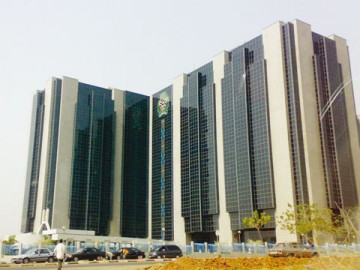
Corporate Law
We offer all embracing range of services in the area of corporate finance, particularly the public or private issue of securities. We offer guidance to companies seeking to raise capital from the capital or money market and also, those seeking quotation on the Nigerian or Abuja Stock Exchange. We advise, structure and guide our clients through the implememtation of these transactions and througj a variety of business combinations, mergers, de-mergers and domestic or complex cross-border acquisitions, divestment's, capital and corporate and shareholders complience and approval procedures.
We are able to provide these services because key members of our team have in various capacities and for many years guided leading private and publicly quoted companies through the range of transactions described above. These include Delta Steel Company Limited, EkoCorp Plc, Unity, Life and Fire Insurance Company Limited, Merchant Bank of Africa Limited, Progress Bank Limited and the Nigerian BottlingCompany Limited, to mention a few.
Our aim, not withstanding our objective, is to remain innovative and versatile. In keeping with this spirit, members of our team have participated in or advised on capital markets and emerging markets, novel schemes, instruments or structures, including unit trusts hybrid as well as debt / equity instruments.
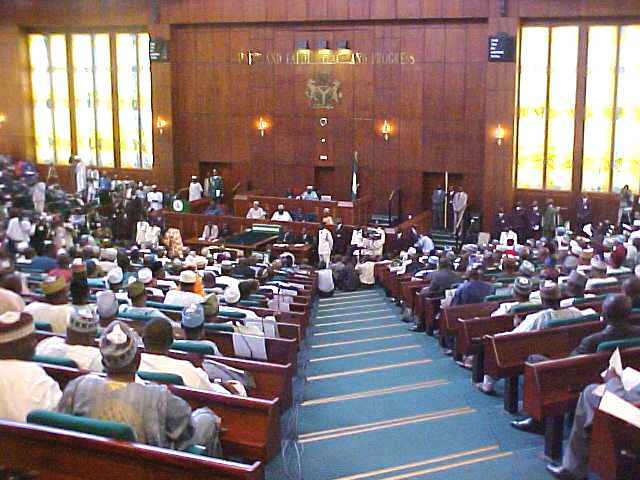
Government Relations & Regulatory Affairs
Temple Chambers (Barristers & Solicitors) has a department dedicated to offering valuable insight, understanding and knowledge of the workings of government and its various regulatory agencies to clients. Such regulatory agencies include the Corporate Affairs Commission, Securities and Exchange Commission, Nigerian Stock Exchange, Utilities Commission, National Broadcasting Commission, Nigerian Communications Commission, Nigerian Tourism Corporation, Federal Environmental Protection Agency and the National Insurance Commission.

Intellectual & Industrial Property
Our intellectual and industrial property practices encompasses the following:
- Patent, Trademark litigation and unfair competition.
- Licensing, Promotion and Execution of licensing projects.
- Filing applications and providing services, including consultation and management, and protection for domestic and overseas patents, trademarks and copyrights.
- Dealing with official actions such as lodging amendments, arranging interior search and litigation opposition, invalidation, cancellation and compulsory licensing proceedings.
- Administrative appeals and proceedings.
- Legal opinion on patent and trademark validity.
- Annuity proceedings.
With the rapid increase of the incidence of faking/imitation of goods, privacy and market competition, we anticipate continued growth in this area of practice.

lnsurance Law
Temple Chambers (Barristers & Solicitors) is well known for its work in insurance matters. The firm understands the structure and complexities of the insurance industry globally. Its knowledge and experience of the local insurance market, acquired by its involvement in the industry as practitioners in insurance, gives the firm an undisputed advantage in insurance law and practice in Nigeria.
Temple Chambers (Barristers & Solicitors) has been in the forefront of developing insurance and re-insurance practice in Nigeria informed by its understanding and knowledge of the interplay of global insurance, the reguatory envirionment in Nigeria and the financial sector both locally and international.

International correspondent relationships
Temple Chambers (Barristers & Solicitors) has contracts and correspondents relations with an extensive network of international law firms. The state of reciprocity is such that the firm is able to extend to its clients the benefits of its accumulated goodwill to assist them whenever their cross border transactions touch on those jurisdictions where its correspondents operate.
The firms activities are enhanced by its modern suite of offices located in the administrative heart of Abuja, Nigeria; a comprehensive equipped law library, computer facilities, internet, adequate telephone and facsimile equipment which facilitate excellent communication with domestic and international clients. Its proficient staff ensures enhanced efficiency and responsiveness.
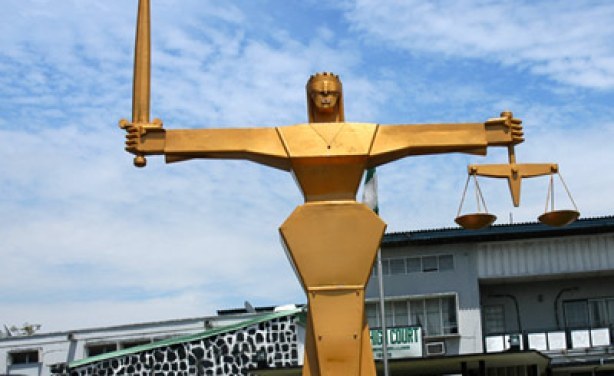
Litigation & Arbitration
This department is designed to serve the litigation matters of all departments. It is particularly active in the area of corporate matters, banking and financial matters including securities, schemes of arrangements, debt recoveries and the procedures that inevitably attend corporate insolvency. The department is fully equipped to handle both commercial disputes before the Courts of Law and matters which, at the option of the client, is referred to arbitration.

Real Estate & Commercial Property
Our access to vast and highly specialized data banks of precedents in the field of real estate, commercial property and mortgage financing ensures that clients benefit from our ability to rapidly create forms and structures to meet their diverse needs. Our extensive knowledge, understanding and goodwill within the regulatory consent procedures to completion.
Taxation
Very few transactions have no tax implications. Tax considerations will often affect and may even dictate the form of a transaction. Temple Chambers (Barristers & Solicitors) therefore pays particular attention to the tax implications of every area of its practice in order to ensure that at all times clients are advised on the tax implications of proposed transactions or their operations in general. The objective is to develop tax efficient structures to meet the commercial aims of clients, guide clients through compliance procedures and handle taxation disputes for clients if and when the need arises.

Special Tailor-made Training for the State Counsel
of the
FEDERAL MINISTRY OF JUSTICE, ABUJA.
Organized by
THE NIGERIAN INSTITUTE OF ADVANCED LEGAL STUDIES
********************
PRIMARY AND SECONDARY EVIDENCE
PRESENTED BY
ENEWA RITA CHRIS-GARUBA (MRS) LL.M (LOND.)
13TH DECEMBER, 2012
1.0 INTRODUCTION:
1.1 This subject is purely technical and will be approached not as an academic exercise but from the practitioner’s point of view.
Our laws, and consequently, the rules governing same, are clearly written and do not allow for mere conjecture. In the practice of the Law and in its applicability you do not invent the wheel, but your strength and versatility lies in your knowledge and understanding of technical rules and their interpretation. Bound invariably by the principles of Stare Decisis and precedents, you are better for a clear understanding of technical rules.
This paper therefore examines the position at law, quoting extensively from the Evidence Act 2011.
1.2 Of all means of proof, documents appear to be the most reliable. Documents are portable, easy to preserve, easy to refer to and can stand the test of time. This is in tune with the Latin Maxim- ‘verba scripta manet’ – meaning “what is written remains”.
Documents are divided into two: public documents and private documents. Contents of a document can be proved by primary or secondary evidence. We shall discuss the purport of primary and secondary evidence and the various forms in which contents of documents can be proved under the provisions of the Evidence Act Cap E14, Laws of the Federation of Nigeria, 2011.
2.0 PRIVATE AND PUBLIC DOCUMENTS
2.1 S. 102 of the Evidence Act defines what public documents are. They are:
102. The following documents are public documents-
(a) documents forming the official acts or records of the official acts-
(i) of he sovereign authority.
(ii) of official bodies and tribunals;
(iii) of public officers, legislative, judicial and executive, whether of Nigeria or elsewhere;
(b) public records kept in Nigeria of private documents.
The following section 103 of the Evidence Act defines private documents as
103. All document other than public documents are private documents.
Private documents are documents originating from private persons or public persons in their private capacity. Incorporated companies whether private or public are in the category of private persons.
3.0 PRIMARY EVIDENCE:
3.1 The Oxford Advanced Learner’s Dictionary defines the word ‘primary’ as “main”, “most important” or “basic”; “ developing or happening first.” Therefore, primary evidence means the main or basic evidence.
Stroud’s Judicial Dictionary, Fifth Edition defines PRIMARY as:-
(3) The “primary” evidence of a document is itself; “secondary” evidence of it is, e.g. a copy, or the recollection of it by a person who has read it. “The terms ‘primary’ and ‘secondary’ evidence are used by our law in the limited sense of the original and derivative evidence of written documents, the latter of which is receivable when, by credible testimony, the existence of the primary source has been established and in its absence explained” (s.89, Best on Evidence (12th ed.) 399 et seq.).
S. 85 of the Evidence Act states that:
“the contents of documents may be proved by either primary or Secondary evidence”. According to S. 86(1), “primary evidence means the document itself produced for inspection of the court.”
This is the original document in which the facts to be proved are stated. Primary evidence under our Law is connected to the Principle of English Common law of “Best Evidence Rule”. This rule which was enunciated in the case of possession of a party must be given. This principle is mainly applied to documents. If a party to proceedings in court wants to prove anything contained in a document, he has to OMICHUND V BARKER (1744) Willes 534, 550 per Lord Hardwicke, is to the effect that the best evidence is to bring the original document to the court for inspection.
3.2 Forms of Primary Evidence
3.2.1 The Evidence Act, under S. 86 provides various forms of primary evidence. They are as follows:
86. (2) Where a document has been executed in several parts, each part shall be primary evidence of the documents.
(3)Where a document has been executed in counterparts, each counterpart being executed by one or some of the parties only, each counterpart shall be primary evidence as against the parties executing it.
(4) Where a number of documents have all been made by one uniform process, as in the case of printing, lithography, photography, computer or other electronic or mechanical process, each shall be primary evidence of the contents of the rest, but where they are all copies of a common original, they shall not be primary evidence of the contents of the original.”
3.2.2 An example of a document executed in several parts is an agreement made up in several parts and signed together with the original copy. The copies of the agreement held by the parties to the agreement are primary evidence of the original copy. Another example is where documentary statements of results of poll were prepared and signed in many copies and issued to candidates or their polling agents. In the case of CHIEF JIM IFEANYICHUKWU NWOBODO v. CHIEF CHRISTIAN CHUKWUMA ONOH & ORS (1984) I SC I, the apex court held that the statements of results were admissible as primary evidence and not secondary evidence of the copy retained by the Federal Electoral Commission.
3.2.3 The purport of S. 86(3) of the Evidence Act is that if an agreement is drawn up in counterparts and only one party to the agreement signs each of the counterparts. Each counterpart would be admissible in evidence against the party that signed the agreement.
3.2.4 S. 86(4) contemplates that where a number of documents were made from the same process as by use of carbon papers, each of the documents made in that same process is primary evidence of the other but not of the draft. The copies made from the draft are in fact secondary evidence of the draft. The same document may be primary evidence for one purpose and secondary evidence for another.
4.0 SECONDARY EVIDENCE
4.1 The Oxford Advanced Learner’s Dictionary defines the word ‘secondary’ as “less important than something else; happening as a result of something else”. Where primary evidence of a document is not available or convenient to be produced, recourse is had to secondary evidence. It is generally a copy of the document or oral evidence of its contents.
By virtue of S. 87 of the Evidence Act, secondary evidence includes:
(a) certified copies given under the provisions of the Act;
(b) copies made from the original by mechanical or electronic process which in themselves ensure the accuracy of the copy, and copies compared with such copies;
(c) copies made from or compared with the original;
(d) counterparts of documents as against the parties who did not execute them;
(e) oral accounts of the contents of a document given by some person who has himself seen it.
4.2 It should be borne in mind that the Evidence Act does not make one type of secondary evidence superior to the other save as specially provided for in the Act. The best proof required of a document is primary evidence. S. 89 (a) - (h) provides for circumstances where secondary evidence is admissible while S. 90(1)(a) - (e) deals with the type of secondary evidence admissible in such cases.
4.3 Evidential Foundation:
4.3.1 Before secondary evidence of a document is admitted, the party tendering the document must lay proper foundation as to why the primary evidence cannot be tendered in court as was held by the Supreme Court in the case of EDOKPOLOR V. SEM-EDO (1989) 4 NWLR (Pt 116) P. 473.
4.4 Forms of Secondary Evidence Admissible
4.4.1 To properly understand the circumstances in which secondary evidence would be admissible and the type of secondary evidence required in such cases, the provision of S. 89(a) – (h) of the Evidence Act have to be married with those of S. 90(1) and (2). Hence:
• When the original is shown or appears to be in the possession or power of the person against whom the document is sought to be proved, or of any person legally bound to produce it, and when after the notice mentioned in section 91 such person does not produce it. (S. 89(a)), when the original has been destroyed or lost and in the latter case all possible search has been made for it (S. 89(c)) or when the original is of such nature, as not to be easily moveable (S. 89(d)), the Evidence Act provides in S.90 (1) (a) that any secondary evidence of the contents of the document is admissible.
• When the existence, condition or contents of the original have been proven to be admitted in writing by the person against whom it is proved or by his representative in interest, (S .89(b)), the written admission is admissible S. 90(1)(b).
• When the original is a public document within the meaning of section 102 (S. 89(e)) or when the original is a document of which a certified copy is permitted by this Act or by any other law in force in Nigeria, to be given in evidence (S.89(f)), a certified copy of the document, but no other secondary evidence is admissible (S. 90(1)(c)).
• When the originals consists of numerous accounts or other documents which cannot conveniently be examined in court, and the fact to be proved is the general result of the whole collection (S. 89(g)), evidence may be given as to the general result of the documents by any person who has examined them, and who is skilled in the examination of the documents (S. 90(1)(d)).
• When the document is an entry in a banker’s book (S. 89 (h)), the copies cannot be received as evidence unless it is first proved that
(i) the book in which the entries copied were made was at the time of making one of the ordinary books of the bank,
(ii) the entry was made in the usual and ordinary course of business,
(iii) the book is in the control and custody of the bank, which proof may be given orally or by affidavit by an officer of the bank, and
(iv) the copy has been examined with the original and is correct and the proof must be given by some person who has examined the copy with the original entry, and may be given orally or by affidavit (S. 90(1)(e)).
See the case of YASSIN V. BARCLAYS BANK DCO (1968) NMLR P. 380. Where it was held that the copy cannot be received in evidence unless it is first proved that the book in which the entries copied were made was at the same time of the making one of the ordinary books of the bank. It must as well be proved that the entry was made in the usual and ordinary course of business and that the book is in the custody and control of the bank.
• When a seaman sues for his wages he may give secondary evidence of the ship’s articles and of any agreement supporting his case, without notice to produce the originals (S. 90(2))
4.4.2 According to S. 258(1) of the Evidence Act,
“banker’s books (and related expressions)” includes ledger, day books, cash books, account books and all other books used in banking business.”
Though it is clear from the definition that it allows of other materials not contained in the section but it does not include vouchers. In the case of FESTUS SUNMOLA YESUF V. AFRICAN CONTINENTAL BANK LTD (1976) 4.S.C, the Supreme Court held that bankers book may include a “ledger card” but cannot be extended to a “voucher” from which entries in a statement of account were obtained.
4.5 Secondary Evidence to Prove That a Bank Has Made Returns or Has Been Duly Licensed
4.5.1. S. 92 of the Evidence Act provides for circumstances in which secondary evidence may be admitted to prove that banks have made returns to the Central bank or have been duly licensed to transact banking business. The section provides as follows:
92. (1) The fact of any bank having duly made a return to the Central Bank, the Nigerian Deposit Insurance Corporation or the Federal Inland Revenue Service may be proved in any legal proceedings by production of a copy of its return verified by the affidavit of an officer of an officer of the bank, or by the production of a copy of a newspaper purporting to contain a copy of such return published by the Central Bank, the Nigerian Deposit Insurance Corporation or the Federal Inland Revenue Service, as the case maybe.
(2) The fact that any bank has been licensed under the Banks and Other Financial Institutions Act may be proved by the production of a certificate by an officer of the bank that it has been duly licensed under that Act.
4.6 Secondary Evidence of Public Documents
4.6.1 Although the best evidence rule equally applies to Private and Public documents, in the case of Public documents, secondary evidence is generally used in their proof. By the combined effect of S. 89(e) and S. 90(1)(c) of the Act, the only acceptable form of secondary evidence of public documents is a certified copy of the document. The Supreme Court re-stated this position in the case of ALADEGBEMI V. FASANMADE (1988) 3 NWLR P. 129. In the case of ODUBEKU V. FOWLER (1993) 9 SCNJ (pt 2) 185 at 195, the Court held that a hand-written copy of a typed document is admissible in evidence if properly certified.
The rationale for certifying a public documents for the purpose of tendering it in evidence are:-
(1) to prevent a situation where officials would have to be summoned to court to testify as to the genuineness of copies made from the original documents or public records,
(2) to preserve the original document from loss or mutilation as a result of frequent removal.
4.6.2 Whether a Photocopy Of A Certified True Copy Of A Public Document Is Admissible:
4.6.2.1. It was held in the case of MINISTER OF LANDS, WESTERN NIGERIA V. DR NNAMDI AZIKIWE (1969) ALL N.L.R. P.49 that a photocopy of a certified true copy is inadmissible as secondary evidence of a public document which it purports to be and that even where there was no objection as to its admissibility, it is not within the competence of parties to the case to admit by consent a document which the law regarded as inadmissible.
4.6.2.2 However, notwithstanding this former position, it was held in the case of RAYMOND IHEONU V. SIMEON OBIRUKU (1998) 1 NWLR (pt 523) 284, that a photocopy of a certified true copy of a public document is admissible. The current practice leans in favour of the latter position that a photocopy of a certified true copy of public documents is admissible.
4.7 NOTICE TO PRODUCE
4.7.1 S. 91 of the Evidence Act states the rules as to notice which is required to be given to the adverse party for the production of the original copy of a document in this way:
“Secondary evidence of the contents of the documents referred to in paragraph (a) of section 89 shall not be given unless the party proposing to give such secondary evidence has previously given to the party in whose possession or power the document is, or to a legal practitioner employed by such party, such notice to produce it as is prescribed by law then such notice as the court considers reasonable in the circumstances of the following case. Provided that such notice shall not be required in order to render secondary evidence admissible in any of the following cases; or in any other case in which the court thinks fit to dispense with it.
(a) When the document to be proved is itself a notice,
(b) When, from the nature of the case, the adverse party must know that he will be required to produce it;
(c) When it appears or is proved that the adverse party has obtained the possession of the original by fraud or force;
(d) When the adverse party or his agent has the original in court;
(e) When the adverse party or his agent has admitted the loss of the document.”
4.7.2. The explanation of Section 91 of the Evidence Act is that when the original copy of a document is in the custody of the person against whom the document is sought to be proved or any person legally bound to produce it; after notice has been given to the person to produce it and he fails to do so, secondary evidence of the contents of the document may be given.
4.7.3 In the case of ADETORO V. U.B.N. PLC (2007) ALL FWLR (pt. 396) 590 at 633 para A-C, the appellant pleaded in his statement of claim his statement of account and stated that he wanted to rely on them and he was in the respondent’s counter claim equally given notice by the respondent to produce same. The Court of Appeal per Sankey JCA (as he then was) held that the appellant could not then complain of the production and admission of documents upon which he hinged his case.
5.0 PRIMARY AND SECONDARY ELECTRONICALLY GENERATED EVIDENCE
5.1 Section 258(2) of the Evidence Act, 2011 defines a document to include:
(a) books, maps, plans, graphs, drawings, photographs and also includes any matter expressed or described upon any substance by means of letters, figures or marks or by more than one of these means, intended to be used or which may be used for the purpose of recording that matter;
(b) any disc, tape, sound track or other device in which sound or other data (not being visual images) are embodied so as to be capable (with or without the aid of some other equipment) of being reproduced from it, and
(c) any film, negative, tape or other device in which one or more visual images are embodied so as to be capable (with or without the aid of some other equipment) of being reproduced from it.
(d) and in the case of any document not falling within the said paragraph (c) of which the visual image is embodied in a document falling within that paragraph, a reproduction of that image whether enlarged or not, and any reference to a copy of the material part of a document shall be construed accordingly:
“computer” means any device for storing and processing information and any reference to information being derived from other information is a reference to its being derived from it by calculation, comparison or any other process….
The above definition has laid to rest the prior contention as to the admissibility of electronically generated evidence form of evidence.
5.2 Furthermore, section 84 of the same legislation expressly provides for the admissibility of statements produced by computers; by this, it can be inferred that all forms of electronically generated evidence are admissible provided that they satisfy certain conditions contained in section 84(2).
5.3. What Aspects of Electronically Generated Evidence Constitute Primary or Secondary Evidence?
5.3.1. In classifying electronically generated evidence into primary and secondary evidence, recourse may be had to section 86(1) of the Act which defines primary evidence as “the document itself produced for the inspection of the court.” Section 86(4) also provides as follows- -
“where a number of documents have all been made by one uniform process, as in the case of printing, lithography, photography, computer or other electronic or mechanical process, each shall be primary evidence of the contents of the rest, but where they are all copies of a common original, they shall not be primary evidence of the contents of the original.”
5.3.2 The former Evidence Act of 1945 did not at all provide for admissibility of electronically generated evidence. There is therefore dearth of Nigerian cases on the subject. The earliest Nigerian case on electronically generated evidence is that of ESSO WEST AFRICA INC.V T. OYEBOLA (1969) 1 WLR P.194 where the Supreme Court noted that “The law cannot be and is not ignorant of the modern business method and must not shut its eyes to the mysteries of the computer”.
5.3.3 The new Evidence Act of 2011 under S. 258 (b), (c) and (d) has provided for various forms of gadgets that can generate electronic evidence in addition to computer print-out. The challenge now is how to accurately classify the various forms of evidence generated by electronic devices into primary and secondary evidence. In the case of ANYAEBOSI V R.T.BRISCOE (NIG LTD), Uwais JSC (as he then was) in his lead judgment held that computer print-out is admissible as secondary evidence if the condition in S. 97 (1) and (2) (now S.90(1) and (2)) of the evidence Act are satisfied. The above two cases were however decided under the repealed Evidence Act of 1945.
5.3.4 In the American case of KAJALA V. NOBLE (1982) 75 CR APP P.149, the Division Court held that the primary evidence rule only applies to written documents in strict sense and did not apply to new category of documents such as tapes and films.
5.3.5 If an e-mail correspondence is sought to be admitted in evidence, it will be difficult to admit it strictly as secondary or primary evidence because the actual e-mail itself is intangible. One can argue that it falls into the category of documents made by one uniform process, making it primary evidence. On the other hand, e-mail print-outs do not fall into the class of documents referred to as primary evidence under S. 86(1) to (4) of the Evidence Act. Therefore a safe course would be to regard it as secondary evidence in accordance with the Supreme Court holding in the case of ANYAEBOSI (supra).
5.3.6 What about discs, tapes, sound track, films, negatives, or other sound or visual devices? Lawal I. Maryam in her Article, “Critical Appraisal of the Relevancy and Admissibility of Electronically Generated Evidence in Nigeria,” which was written before the coming into effect of the 2011 Evidence Act, opined that, “disks and other storage devices will not qualify as secondary documentary evidence but rather real evidence under S. 77 (d) (ii) of the Evidence Act” .
But in the light of S. 86 (4) of the current Evidence Act, which states that where a number of documents have all been made by one uniform process, as in the case of printing, lithography, photography, computer or other electronic or mechanical process, each shall be primary evidence of the contents of the rest, but where they are all copies of a common original, they shall not be primary evidence of the contents of the original, the above electronic documents can be classified as primary or secondary evidence.
5.3.7. For instance, if at an NBA Conference, several video tapes covering the event are produced, each tape amounts to primary evidence of the others. But, if duplicate copies are made from one of the original tapes, those copies would become secondary evidence of the original tapes in view of S. 87 (b) of the Act.
6.0 CONCLUSION
6.1 Documents are veritable means of proof. Documents can either be public documents or private documents. The contents of private documents can be proved by primary and secondary evidence. But the contents of public documents are generally proved by secondary evidence. The best evidence required to prove the contents of a document is the document itself, that is, the original of the document. But where the original is not convenient or available, secondary evidence can be tendered in court in order to facilitate the ends of justice. Although electronically generated evidence was not provided for under the repealed Evidence Act, under the new Evidence Act 2011, discs, tapes, sound tracks, films, negatives and other electronic devices have been recognized as documents and can be classified into primary or secondary evidence depending on their mode of production as stated in S.86(4).
7.0 REFERENCES
1. Evidence Act, Cap E 14 Laws of the Federation of Nigeria, 2011.
2. Archbold, Criminal Pleading, Sweet & Maxwell, 1999.
3. Modern Nigerian Law of Evidence by Fidelis Nwadialo, 2nd Edition.
4. Evidence Compendium by Professor Tony Ukam OON, JP; cited as (2012) 7 Q.R.R p.786-787.
5. Nigerian Evidence Act Annotated-Edited by Honourable Justice Adetula Alabi (Rtd).
6. Legal Alert “Admissibility of Electronic Evidence http://www.proshareng.com/.../Legal-Alert- may 2012-Admissibility May 2012.
7. “Critical Appraisal of the Relevancy and Admissibility of Electronically Generated Evidence”- Lawal Ibironke Maryam
< http://www.unilorin.edu..ng/studproj/law/0640ia101.pdf > May 2011.

OBEKPA HOUSE
Copyright @ 2013 Temple Chambers (Barristers & Solicitors). All Rights Reserved.
Designed by Itakom Technology.